Use cut-away light stabilizer
Cut-away light (1.5oz) stays in to support silk fibers through wash. Tear-away pulls and rips silk threads when removed. Pellon SF101 or Sulky Soft & Sheer in lightweight versions.
 StitchPilot.ai
Tutorial · Fabric techniques
Silk is the most delicate common embroidery fabric — drapes elegantly but punctures easily, and shows every imperfection in stitching. Bridal robes, scarves, and luxury items demand silk-friendly setup. This guide covers stabilizer, needle, thread, and technique for clean silk embroidery.
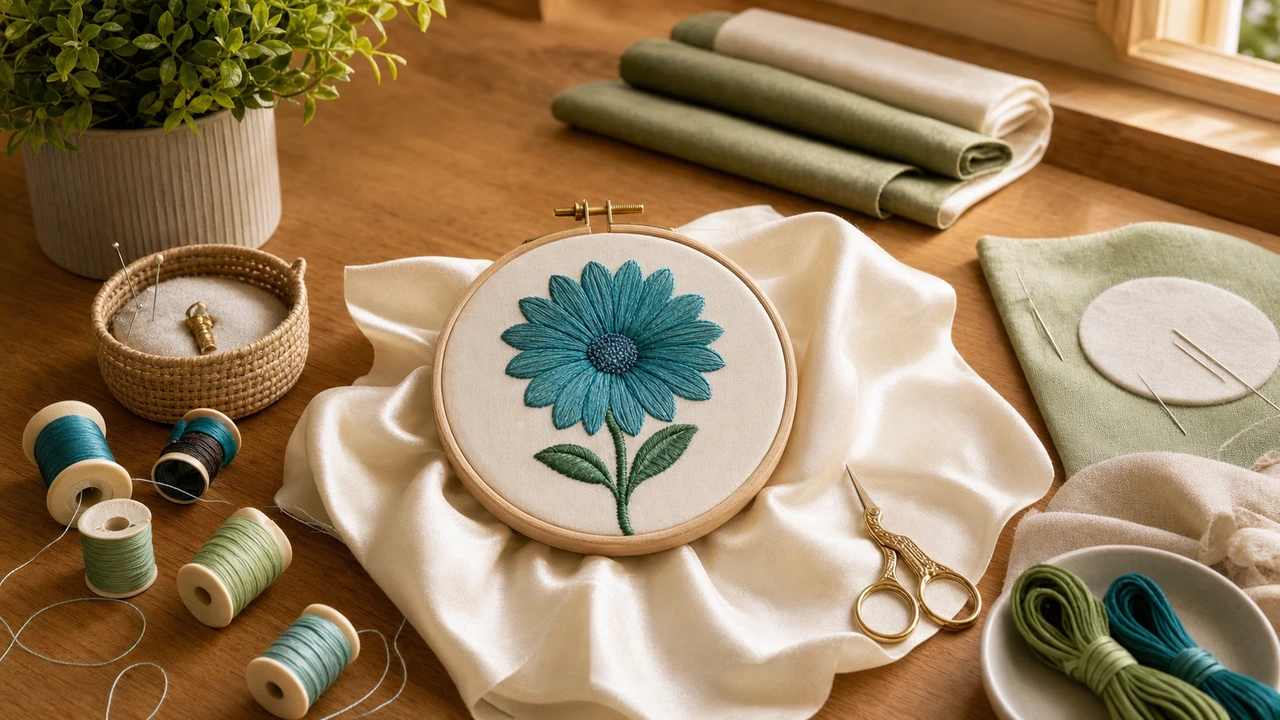
Silk embroidery setup
Cut-away light (1.5oz) stays in to support silk fibers through wash. Tear-away pulls and rips silk threads when removed. Pellon SF101 or Sulky Soft & Sheer in lightweight versions.
Silk needs a sharp, fine needle — size 11 (75 European) microtex / sharp embroidery. Sharp avoids cutting silk threads sideways; small eye matches 60wt thread without strain.
60wt fine thread is the silk industry default. 40wt thread is too thick — punches and weighs the silk, looks bulky. 60wt feels light, drapes naturally with silk.
Hoop silk between two pieces of tissue paper to prevent hoop burn marks. Tighten until drum-tight but not so much that silk distorts. Remove the inner tissue before stitching; outer tissue stays in hoop.
Why silk is hard
What goes wrong:
Best silk projects
Common silk embroidery projects:
How to embroider on silk — common questions
Cut-away light (1.5oz) is the go-to. It supports silk fibers through stitching and washing without distorting the silk's drape. Tear-away can tear silk; water-soluble does not provide enough support for most silk designs.
Size 11 (75 European) sharp / microtex needle. Smaller needles avoid leaving visible holes in silk weave. Larger needles tear silk threads sideways and damage the fabric permanently.
Not ideally. 40wt is the industry standard for cotton/polyester but feels thick on silk — adds weight, may pucker. 60wt is the standard recommendation for silk because it sits lighter and matches silk's natural texture.
Place tissue paper between the silk and both hoop rings. The tissue absorbs hoop pressure and prevents permanent crease marks. Remove tissue from the design area before stitching; outer tissue stays in.
Photo-stitch on silk is technically possible but rarely recommended — silk shows every stitch imperfection and dense fills pucker the fabric. Use lighter cotton/polyester for photo embroidery.
Plan before stitching
Silk does not forgive over-dense designs. Preview your design at size 3-4 inches in StitchPilot.ai to confirm it suits silk.
Plan a silk design →