Match stabilizer to fabric weight
Lightweight fabrics (silk, organza) need lightweight stabilizer to avoid show-through. Heavy fabrics (denim, canvas) can take heavier stabilizer for stronger support. Match weight to fabric.
 StitchPilot.ai
Reference · Stabilizers
Stabilizer is the backing material that supports the fabric during stitching. The wrong stabilizer ruins an otherwise good digitizing job — puckering, registration drift, distorted stitches. This guide walks through the major stabilizer types, when to use each, and how stabilizer choice interacts with design density.
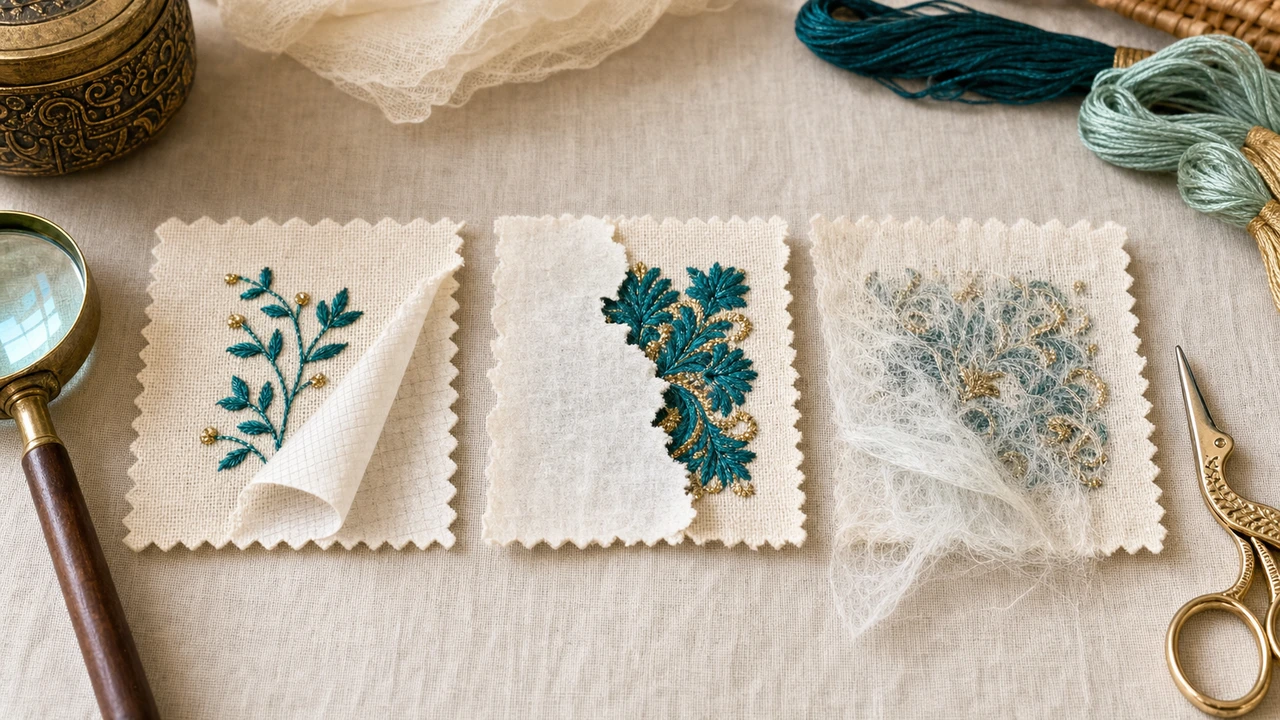
Stabilizer selection
Lightweight fabrics (silk, organza) need lightweight stabilizer to avoid show-through. Heavy fabrics (denim, canvas) can take heavier stabilizer for stronger support. Match weight to fabric.
Cut-away for stretchy or unstable fabrics (knits, t-shirts). Tear-away for stable woven fabrics where you want a clean back. Wash-away for delicate fabrics or open lace where stabilizer must disappear.
Dense designs (small lettering, fills) need heavier stabilizer or multiple layers to support the stitches. Light designs work with lighter stabilizer.
For production work, run a test stitch on actual production fabric with chosen stabilizer. Stabilizer choice interacts with thread tension, needle, and hoop size in non-obvious ways.
Three main families
Embroidery stabilizers fall into three main families based on how the excess is removed after stitching:
Common mistakes
Stabilizer choice failures are among the most common embroidery production problems:
Embroidery stabilizer types — common questions
Cut-away medium-weight is the standard for cotton jersey t-shirts. The cut-away gives permanent support since cotton jersey stretches; medium weight balances support with comfort against skin.
No — fabric type and design density both affect stabilizer choice. Cut-away medium works for many cases but is wrong for stable wovens (use tear-away) and delicate fabrics (use wash-away or light tear-away).
Yes, even stable fabrics benefit from light tear-away stabilizer for clean stitch registration and reduced thread pull-through. Without stabilizer, fabric tension fights against the stitches.
Light (1.5 oz) for delicate fabrics, medium (2.0 oz) for general use, heavy (2.5+ oz) for dense designs or thick fabrics. When in doubt, use two layers of medium rather than one layer of heavy.
Yes. Dense designs that work fine on stable woven need extra stabilizer support on stretchy fabric. If digitizing for a specific use case, plan stabilizer alongside stitch density.
Design with stabilizer in mind
Use the StitchPilot.ai workspace to preview density and adjust before committing to a production stabilizer setup.
Plan your next design →