Pick by application
Topping film (thin, on top of terry cloth): prevents stitches sinking into loops. Light water-soluble (under delicate fabrics): replaces tear-away. Heavy water-soluble (for FSL): provides structure.
 StitchPilot.ai
Reference · Water-soluble
Water-soluble stabilizers dissolve in water — leaving no trace after the embroidery is done. Used for delicate fabrics, terry topping (preventing stitch sinkage), and freestanding lace. This guide covers the main water-soluble types and when to use each.
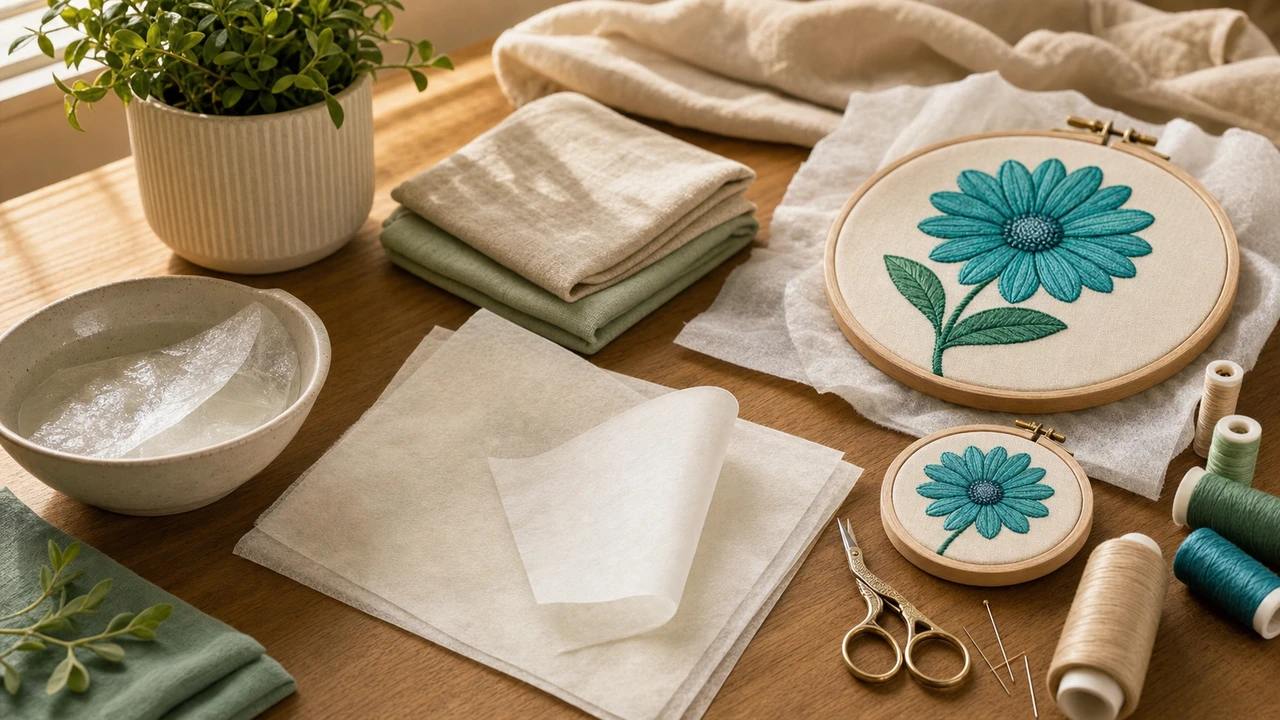
Picking water-soluble stabilizer
Topping film (thin, on top of terry cloth): prevents stitches sinking into loops. Light water-soluble (under delicate fabrics): replaces tear-away. Heavy water-soluble (for FSL): provides structure.
Water-soluble stabilizer hoops like regular stabilizer. Stitch the design normally — works through stitching just like other stabilizers.
After stitching, soak in warm water 5-10 minutes. Stabilizer dissolves completely. Rinse thoroughly to remove residue.
Pat dry, optionally starch and block to shape (especially for FSL). Result: clean embroidery with no stabilizer trace.
Water-soluble types
Common water-soluble stabilizer variants:
Common water-soluble mistakes
Issues to avoid:
Water-soluble stabilizer — common questions
Three main cases: (1) topping on terry cloth to prevent stitch sinkage, (2) under delicate fabrics like silk where tear-away would damage, (3) for freestanding lace where it provides temporary structure.
Soak the finished embroidery in warm water for 5-10 minutes. Stabilizer dissolves completely. Rinse thoroughly to remove residue. Pat dry; optionally starch and block to shape.
Topping film is thin (for use ON TOP of terry/fleece to prevent stitches sinking). Heavy water-soluble is thick (for use UNDER FSL projects to provide structure during stitching). Both dissolve in water.
No — once it gets wet during stitching (humidity, sweat from hands), it starts dissolving. Use fresh each time.
Not if rinsed thoroughly. Inadequate rinsing leaves residual stiffness in the fabric. Soak 5-10 minutes, rinse with clean water, repeat if necessary.
Stabilizer planning
See your design at actual size in StitchPilot.ai — helps plan stabilizer weight and coverage.
Plan stabilizer choice →