Use water-soluble stabilizer only
FSL hoops only water-soluble stabilizer (no fabric). Use heavy/medium water-soluble (Sulky Solvy, Vilene WS), two layers for stability.
 StitchPilot.ai
Tutorial · Freestanding lace
Freestanding lace (FSL) embroidery — standalone lace pieces with no fabric backing — produces stunning Christmas ornaments, snowflakes, doilies, jewelry, and bridal accents. The technique relies on water-soluble stabilizer and tightly interconnected stitching. This guide explains the FSL workflow.
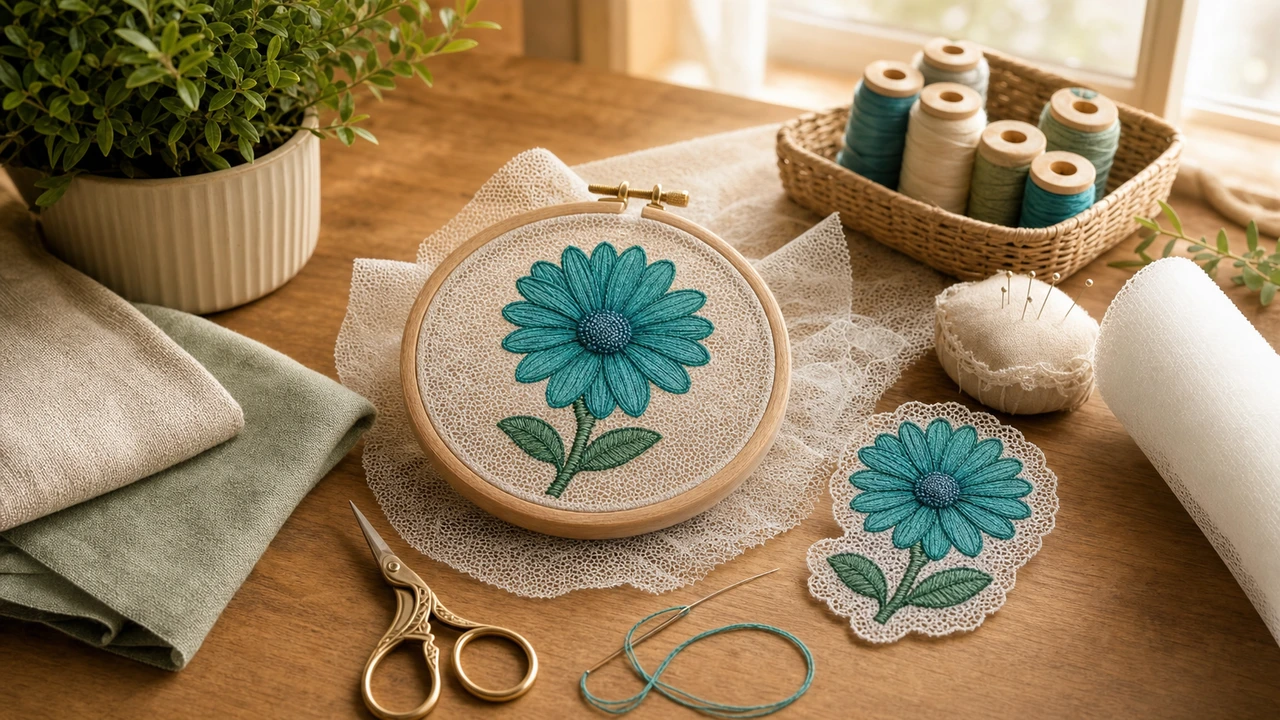
Freestanding lace workflow
FSL hoops only water-soluble stabilizer (no fabric). Use heavy/medium water-soluble (Sulky Solvy, Vilene WS), two layers for stability.
FSL designs need every stitch to connect to others — no isolated stitches that would float free after washing. Specifically designed FSL files have this baked in.
FSL designs are stitch-dense. Slower machine speed prevents thread breaks. Watch closely; misfires are unrecoverable on water-soluble alone.
After stitching, soak in warm water (5-10 min) to dissolve the stabilizer. Pat dry, optionally starch and block to shape. Result: standalone lace.
Common FSL projects
FSL embroidery is great for:
FSL-specific tips
Issues new FSL embroiderers run into:
How to make freestanding lace — common questions
FSL is embroidered lace with no fabric backing — it stands alone after the water-soluble stabilizer is washed out. Used for ornaments, doilies, jewelry, and bridal accents.
Heavy water-soluble stabilizer (Sulky Solvy, Vilene WS, or similar) — two layers for stability. After stitching is complete, the stabilizer dissolves in warm water, leaving just the lace.
No — FSL needs every stitch interconnected. Standard designs may have isolated stitches that would float away. Specifically-designed FSL files have this connectivity built in.
Soak the finished embroidery in warm water for 5-10 minutes. Stabilizer dissolves completely. Pat dry, optionally starch and block to shape. Don't skip rinsing thoroughly — residual stabilizer makes the lace stiff.
Yes — polyester or rayon thread holds well to repeated washing. Treat FSL like delicate hand-wash items. Avoid harsh dryer cycles.
Try FSL
Upload your FSL-ready design, preview before stitching — preview saves expensive water-soluble stabilizer.
Convert FSL design →