Check stabilizer choice and weight
Stretch fabric needs cut-away stabilizer (permanent). Stable wovens can use tear-away. Always sized to fabric weight — light stabilizer on heavy design = pucker.
 StitchPilot.ai
Troubleshooting · Puckering
Puckered fabric around an embroidered design is one of the most common embroidery quality issues — and one of the most fixable. This guide explains the four main causes (stabilizer, density, tension, hooping) and walks through fixing each.
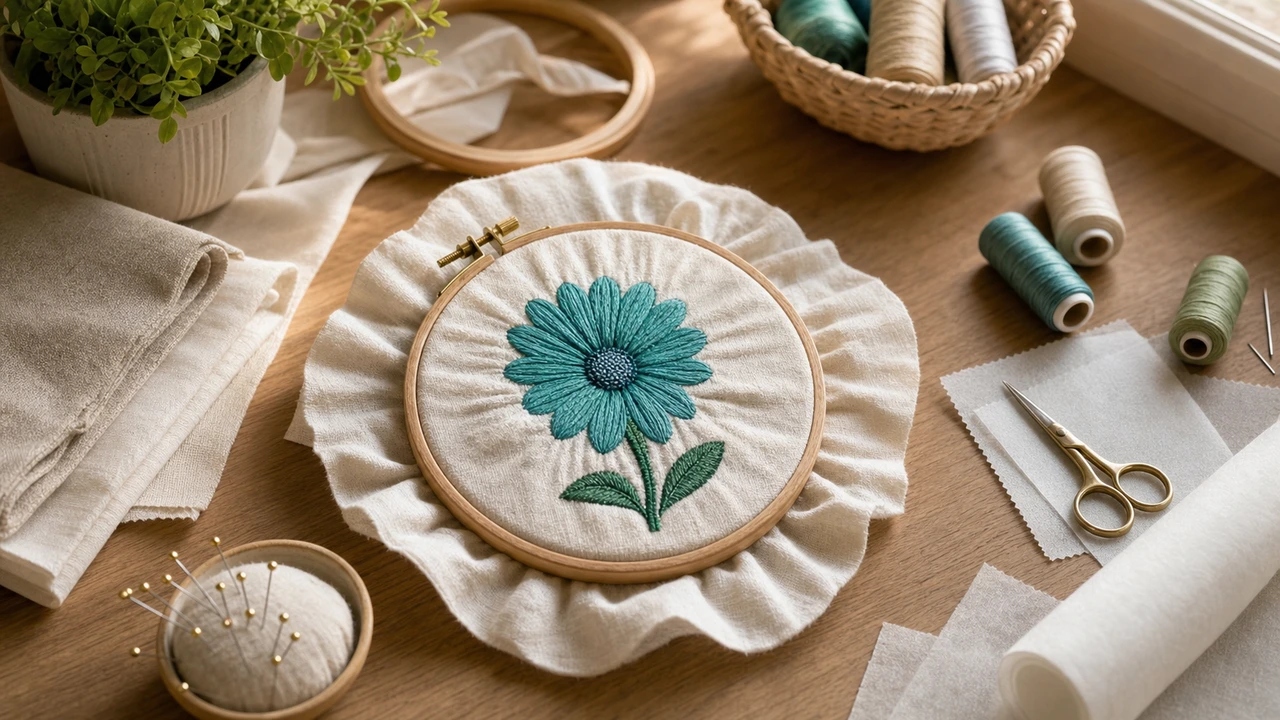
Diagnose puckering
Stretch fabric needs cut-away stabilizer (permanent). Stable wovens can use tear-away. Always sized to fabric weight — light stabilizer on heavy design = pucker.
Designs with stitch density too high (over 4-5 stitches/mm in fills) pull fabric together as they stitch. Open in StitchPilot.ai's viewer to see density visually.
Too-tight top tension pulls fabric. Loosen ¼ turn at a time. Generally puckered embroidery + thread breaking = tension too tight.
Loose hooping lets fabric distort during stitching. Hoop tight enough that fabric is taut but not stretched (you should hear a "drum" sound when you tap it).
Cause-by-cause fixes
Ranked by frequency in home embroidery:
Fabric-specific puckering
Different fabrics pucker for different reasons:
Embroidery puckering — common questions
Most common causes: wrong stabilizer (35%), hooping too loose (25%), tension too tight (20%), design density too high (15%). Start by confirming stabilizer and hooping.
Cut-away medium-weight stabilizer for stretch and unstable fabrics. The permanent backing supports the stitches against fabric distortion. Tear-away works for stable wovens but doesn't support against stretch.
Yes. Designs over-digitized with too-high density (over 4-5 stitches/mm in fills) physically pull fabric together as they stitch. Open the file in StitchPilot.ai to see density visually.
Drum-tight — when you tap the fabric in the hoop, it should sound like a drum. Tight enough to prevent shifting during stitching, but not so tight you stretch the fabric (which causes its own puckering after unhooping).
Look at what's different in the puckering cases — different fabric? Different design? Different thread? Track the variable. Stretchy fabric or dense design will pucker every time if stabilizer isn't right.
Catch density issues early
Density problems show visually — fix the design before you waste fabric and thread.
Check density in the viewer →