Plan placement before hooping
A finished bag has seams and pockets — design placement must avoid those. Plan placement before hooping to avoid stitching across a seam.
 StitchPilot.ai
Use case · Bags
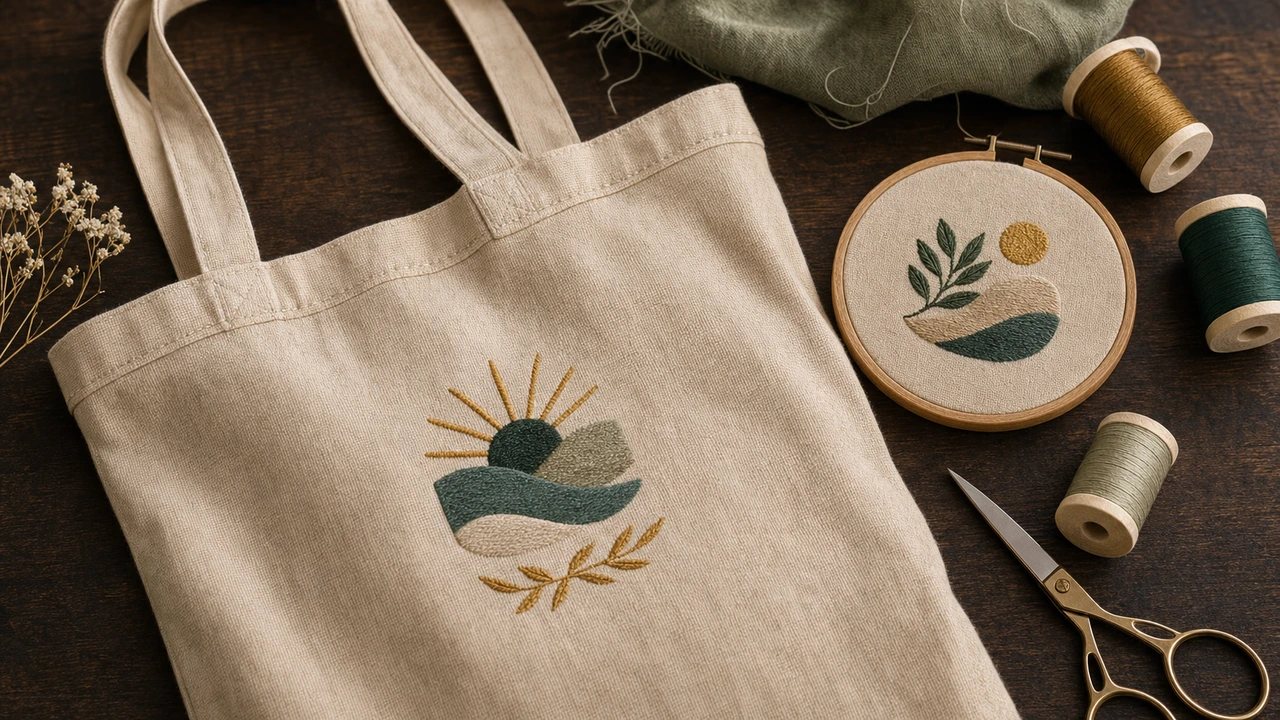
Bag embroidery covers tote bags, backpacks, gym bags, makeup bags, and small leather goods. Each material — canvas, denim, nylon, leather — has different stabilizer and density needs. This guide covers the bag-specific workflow.
Recommended workflow
A finished bag has seams and pockets — design placement must avoid those. Plan placement before hooping to avoid stitching across a seam.
Canvas tote: cut-away medium. Nylon gym bag: tear-away light. Leather small goods: tear-away light + tape positioning. Each material needs its own approach.
Convert artwork in StitchPilot.ai. For canvas and denim, use standard density. For nylon and leather, reduce density 10–15% to avoid bulky stitches that show on the back.
Bags are bulky compared to flat goods — the embroidery arm has limited clearance. Hoop just the panel being embroidered. Run slower than usual to avoid catching seams.
Bag materials guide
Bag fabric varies wildly. Knowing the material determines the right stabilizer and density.
Hooping challenges
Most bag embroidery happens before the bag is assembled — but increasingly, retail shops embroider finished bags as a customization service.
Bag Embroidery — common questions
Yes, with care. Use a leather needle, tear-away light stabilizer, and adhesive backing to position. Reduce stitch density 15% — leather does not stretch like fabric so dense stitches make the leather buckle.
Yes. Use tear-away light stabilizer and reduce stitch density 10%. The bag liner may resist tearing the stabilizer cleanly — use a small fingernail to coax the perforations.
Both work. Embroidering before assembly is easier (no bulky bag in the embroidery arm). For finished bags, use a sit-down machine or a multi-needle commercial machine with a long arm.
Cut-away medium-weight stabilizer. Canvas is durable enough that permanent backing supports the stitches through years of carrying loads.
Yes. Embroider before assembly is best — each panel goes through the machine flat. For finished backpacks, you may need to disassemble straps or pockets to clear the embroidery arm.
Built for the bag
Convert designs for canvas, denim, nylon, or leather — with the right stabilizer and density per material.
Convert a bag design →