1. Skim for unfamiliar terms
Read through once — anywhere you go huh?, pause and read carefully. Most terms appear in multiple tutorials, so the early effort pays off.
 StitchPilot.ai
Reference · Glossary
Embroidery vocabulary is dense. Forums and tutorials assume you know what satin stitch underlay means or what a pull compensation value does. This glossary defines every term a beginner needs — files, stitches, machine parts, supplies, and processes — in plain English with no jargon-on-jargon.
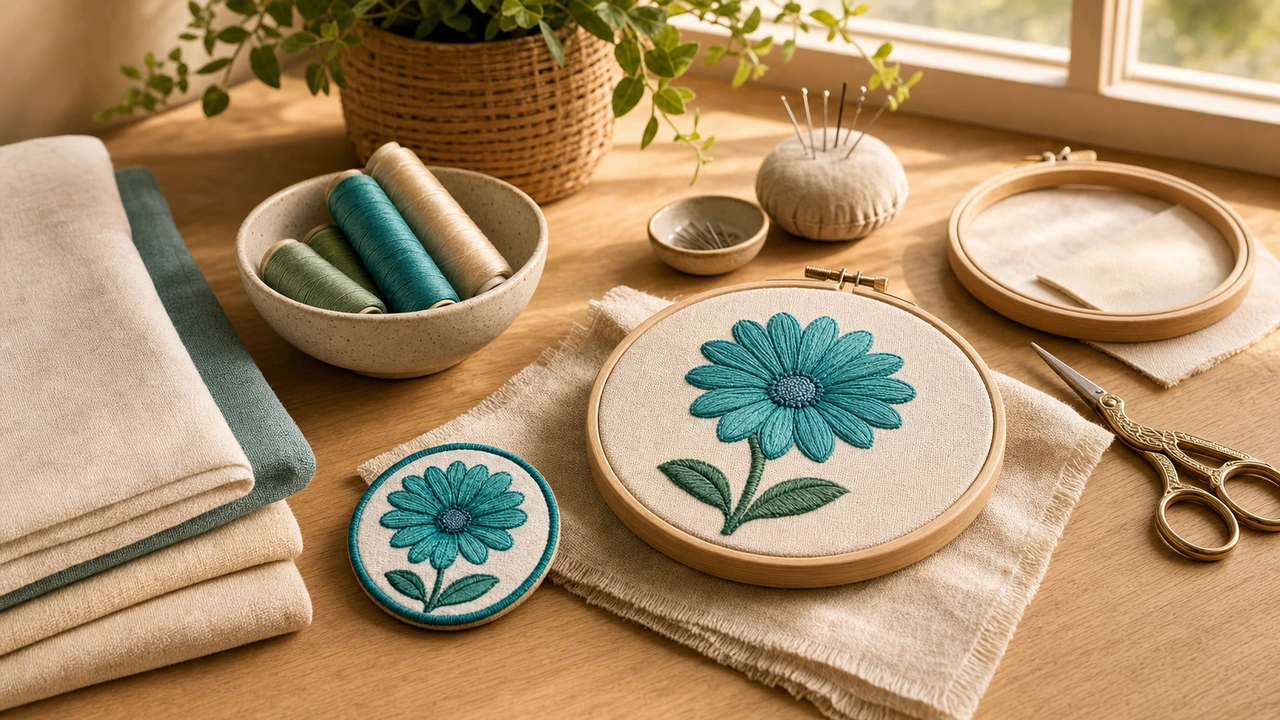
How to use this glossary
Read through once — anywhere you go huh?, pause and read carefully. Most terms appear in multiple tutorials, so the early effort pays off.
Refer back whenever a tutorial uses a term you do not recognize. Within a month, most terms will be second nature.
Reading definitions only goes so far — running a few projects makes terms like registration and pull compensation click instantly.
Commercial digitizing has hundreds of obscure terms. Beginners only need ~40 of them. We have prioritized the essentials here.
Files and formats
Common file-related terms:
Stitches and structure
How embroidery is built:
Machine and supplies
Physical things in the embroidery room:
Embroidery 101 glossary — common questions
Digitizing is the process of converting an image, logo, or vector into a machine-readable embroidery file (PES, DST, JEF, VP3). Traditional digitizing uses software like Wilcom Hatch; AI digitizing (StitchPilot.ai, others) does it automatically from any image.
A satin stitch is tightly packed zigzag stitches creating a smooth shiny surface. Used for borders, lettering, narrow shapes. Most embroidery look comes from well-executed satin stitches.
Underlay is light preliminary stitching that stabilizes the fabric before the visible top stitches. It anchors the fabric, prevents distortion, and produces cleaner top coverage. All quality digitizing includes proper underlay.
Stitch density is how closely stitches are packed. Higher density = more coverage and thread use but risks fabric distortion. Lower density = lighter look and fabric showing through. Density is one of the main knobs in digitizing.
Embroidery decorates fabric with thread designs (logos, monograms, art). Quilting joins multiple fabric layers with stitched patterns — usually decorative but structural. Both can be done on the same machine for some quilting embroidery machines, but they are different crafts.
See digitizing happen
The fastest way to understand digitizing is to see it work — upload an image to StitchPilot.ai and watch the file appear.
Try AI digitizing →