Use bobbin-specific thread (not top thread)
60wt or 90wt bobbin thread is finer than 40wt top embroidery thread. Using top thread in the bobbin causes thread breaks and bulky bobbin builds.
 StitchPilot.ai
Reference · Bobbin thread
Bobbin thread is the under-thread that holds embroidery stitches together. It's usually invisible from the front, but it affects stitch quality more than embroiderers realize. This guide covers pre-wound vs DIY bobbins, weight selection, and best practices.
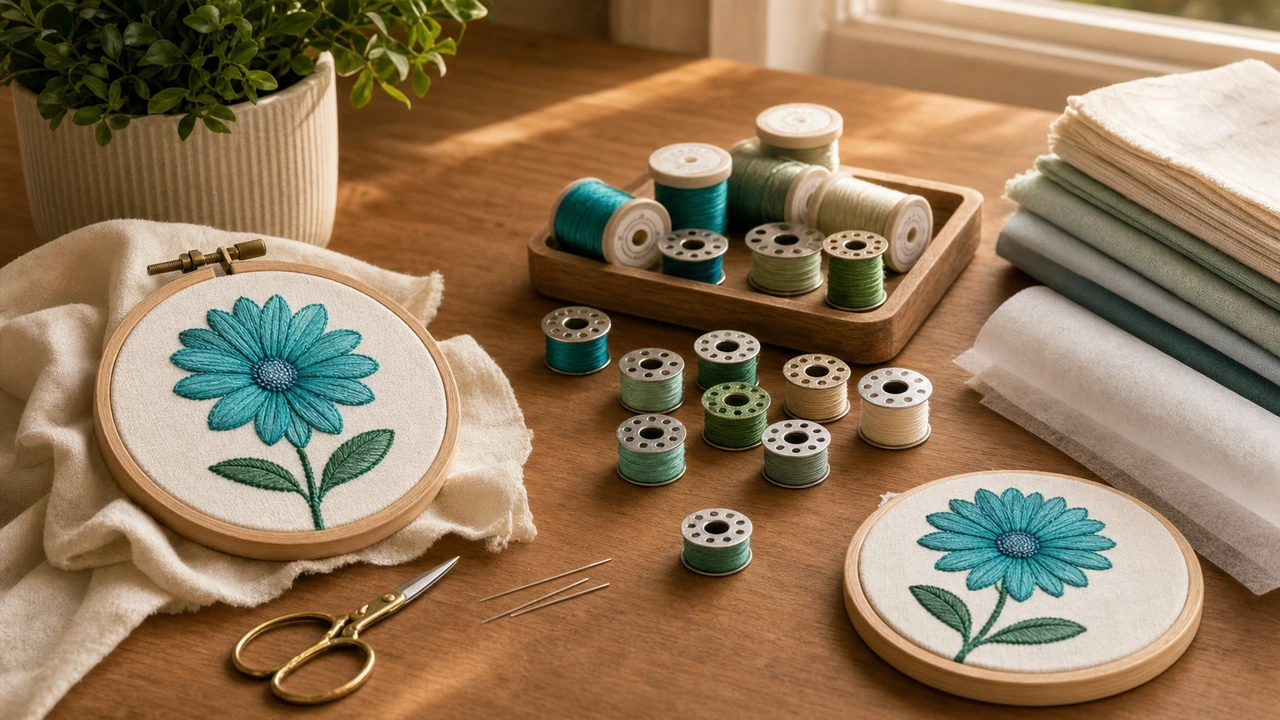
Picking bobbin thread
60wt or 90wt bobbin thread is finer than 40wt top embroidery thread. Using top thread in the bobbin causes thread breaks and bulky bobbin builds.
Pre-wound bobbins ($0.30-0.60 each in bulk): consistent winding, less downtime. DIY winding from large spools: cheaper per yard, more flexibility on color/weight.
Counter-intuitive: match bobbin to FABRIC color (white bobbin on white fabric, black on black). White bobbin is most common since most embroidery happens on light fabrics.
Bobbin runs out mid-stitch ruins designs (or wastes thread waiting to stop). Watch the bobbin window; refill when 25% remains.
Pre-wound vs DIY bobbins
Both have advantages:
Common bobbin issues
Bobbin-related embroidery issues:
Bobbin thread for embroidery — common questions
60wt or 90wt bobbin-specific thread. Finer than the 40wt top embroidery thread. Using top thread in bobbin causes problems — thread breaks and bulky bobbin builds.
Pre-wound for consistency and convenience (most production shops). DIY winding for cost savings and color flexibility. Many home embroiderers mix both.
Match the bobbin to your FABRIC color, not your top thread color. White bobbin on white fabric, black on black. White is the most common choice since most embroidery uses light fabrics.
A pre-wound bobbin typically holds 60-120 yards of 60wt bobbin thread — enough for several typical embroidery designs. Watch the bobbin window and refill at 25% remaining.
Not ideally. Top thread (40wt) in the bobbin produces bulky bobbin builds and excessive bobbin changes. Use bobbin-specific thread (60wt or 90wt) for best results.
Plan thread before stitching
Check stitch count in the viewer to estimate bobbin usage — refill before you run out.
Inspect a design →