Digitize the patch design
Upload your logo or design to StitchPilot.ai. For patches, plan stitches to include a "border" or "satin edge" around the perimeter (you may need to add this manually).
 StitchPilot.ai
Tutorial · Patches
Custom embroidery patches — for jackets, hats, bags, uniforms — are a high-demand category for embroidery sellers. This guide covers the full patch-making workflow: digitizing, stabilizer choice, fabric for patches, finishing edges, and backing options.
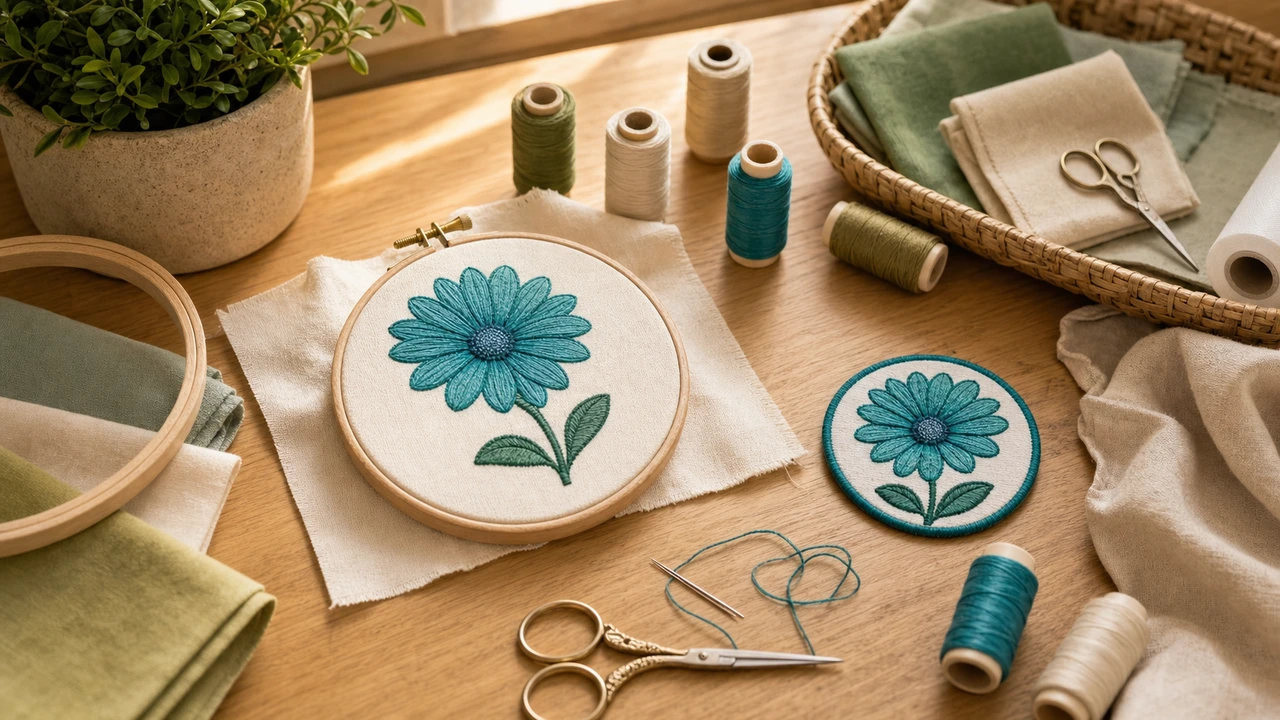
Patch making workflow
Upload your logo or design to StitchPilot.ai. For patches, plan stitches to include a "border" or "satin edge" around the perimeter (you may need to add this manually).
Twill is the patch standard. Cut-away stabilizer underneath for support. Some makers use water-soluble film on top for clean stitches.
Merrowed edge (rolled, sewn after cutting) is the traditional patch look. Satin stitch edge (digitized into the design) is the home-machine alternative.
Iron-on heat seal adhesive (for permanent attachment), sew-on (for caps and jackets that won't take heat), or Velcro hook backing (for modular use).
Backing types
Different patch backings serve different needs:
Patch fabric guide
Common patch fabrics:
How to make embroidery patches — common questions
Digitize design → stitch on twill fabric with cut-away stabilizer → finish edge with satin stitch or merrowing → cut out → add backing (iron-on heat seal, sew-on, or Velcro). StitchPilot.ai handles the digitizing step.
Twill (poly-cotton blend) is the industry standard — durable, easy to stitch, holds shape well. For specialty patches: felt (casual), canvas (rugged), satin (high-end).
Iron-on uses heat-activated adhesive on the back — easy but may peel after multiple washes. Sew-on requires actual sewing — most durable, used on uniforms and jackets that get heavy use.
Yes — Velcro hook backing is sold by the yard. Cut to patch size, attach with adhesive or sewing. Common for tactical / morale patches on military, police, and outdoor gear.
Two main options: (1) Merrowed edge — patch is cut out and an industrial machine rolls/sews the edge. (2) Satin-stitch edge — digitized into the design, no post-stitching cutting needed. Most home embroidery uses satin-stitch edges.
Make patches
Upload your design, StitchPilot.ai produces the embroidery file — start your patch production line.
Digitize a patch →