1. Speed: machine is 50-200x faster
A typical 4 inch design hand-embroidered = 4-12 hours. Machine = 5-20 minutes (depending on stitch count). If you want volume or commercial output, machine is the only realistic path.
 StitchPilot.ai
Comparison · Hand vs machine
Hand and machine embroidery produce different aesthetics, take different time, and have different learning curves. Each has a place. This guide compares them across speed, cost, look, learning, and use cases, so you can pick the right one — or both — for what you want to make.
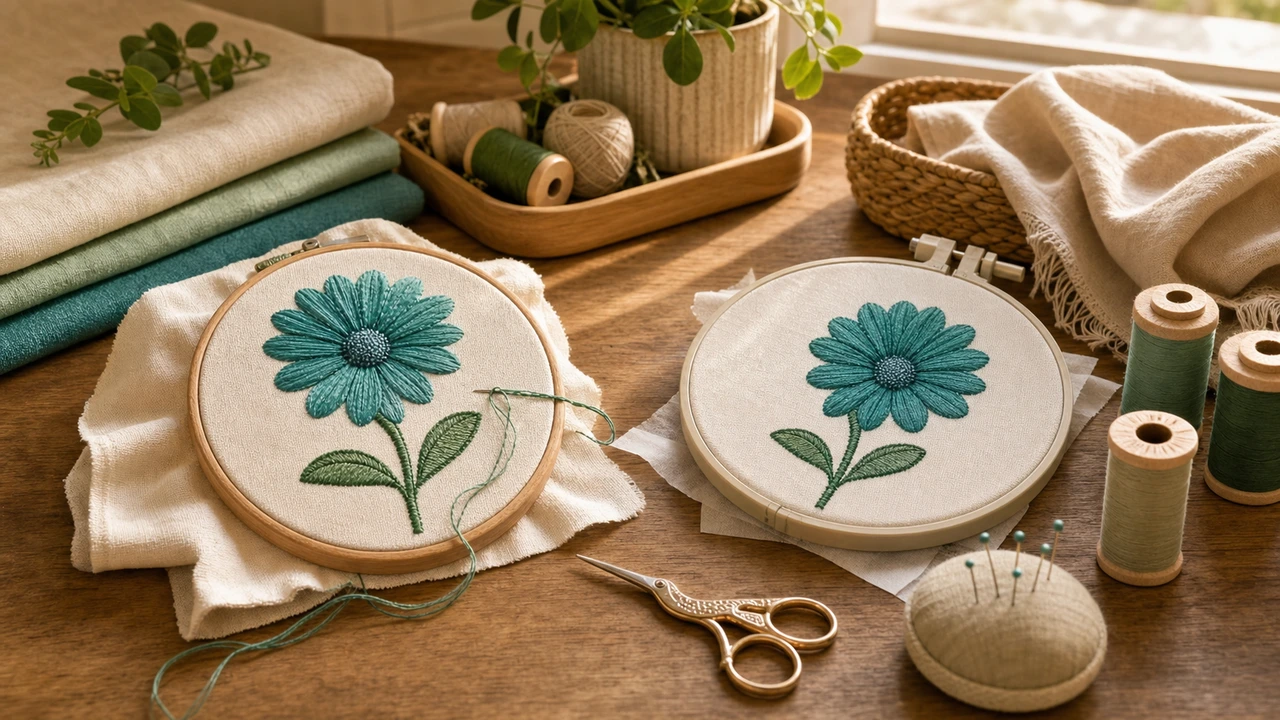
Picking your approach
A typical 4 inch design hand-embroidered = 4-12 hours. Machine = 5-20 minutes (depending on stitch count). If you want volume or commercial output, machine is the only realistic path.
Hand embroidery: $20-40 startup (hoop, needles, floss, fabric). Machine: $500-800 startup but per-piece cost drops to ~$1-3 in materials. Volume tips the cost equation toward machine.
Hand embroidery shows individual stitches and human variation — premium and artistic. Machine embroidery is geometric and consistent — commercial and clean. Both have markets; pick based on aesthetic you want.
Hand: 1-2 weeks to do passable stitches, years to master. Machine: 1-2 weeks for first project, 2-3 months for reliable quality. Hand rewards artistic skill; machine rewards process discipline.
When hand embroidery wins
Hand embroidery is the right choice when:
When machine embroidery wins
Machine embroidery is the right choice when:
Hand embroidery vs machine embroidery — common questions
Different kinds of hard. Hand embroidery requires manual stitch skill — years to master, hours per piece. Machine embroidery requires process discipline — understanding fabric, stabilizer, tension, files. Neither is intrinsically harder; they reward different skills.
Usually yes. Hand embroidery has visible irregular stitches and a human touch. Machine embroidery is geometric and precise — straight lines, even satin stitches, perfect fills. Trained eyes spot the difference instantly.
Yes, increasingly — particularly when the design is custom and creative. The art part is mostly the design (digitizing, color choice, composition). Production-machine embroidery on a corporate logo is craft; an artistic custom piece is art.
Not required. The skills overlap only slightly (color and design sense). Most people pick machine embroidery for output and use hand embroidery occasionally for special pieces, or vice versa.
Most things, yes — even very intricate designs with the right machine and digitizing. Limits: very small fabric pieces, unusual 3D shapes, and certain artisanal stitches that hand-embroiderers prize. For 95 percent of designs, machine can match or beat hand in execution.
Try machine embroidery output
Compare AI-generated machine embroidery files to your hand work — useful for picking your craft.
Try machine embroidery digitizing →